
How to Fire a Campaign Consultant: A Strategic Transition Guide

What if the right move isn’t an immediate dismissal, but a disciplined reset of the campaign’s working relationship? If you’re weighing how to fire a campaign consultant, it can be hard to tell whether disappointing results reflect the consultant’s work, campaign decisions, or conditions beyond anyone’s control. A rushed change can put fundraising, voter contact, messaging, and deadlines at risk.
Those concerns are valid. Ending a professional relationship is not just a personnel decision. It is a transition that needs to protect the campaign’s operations and strategic direction. Before making a final call, compare the consultant’s work with agreed responsibilities and documented performance. Then consider whether a candid reset, a narrower scope, or a full transition best serves the campaign.
This guide will help you assess the relationship, review contract terms and outstanding work, and identify what needs to transfer, including data access and key deadlines. You’ll also learn how to organize the handoff and define the strategic support your campaign needs next. The goal is a clear decision followed by a controlled transition that keeps the campaign moving.
Table of Contents
How to Know Whether to Fire a Campaign Consultant
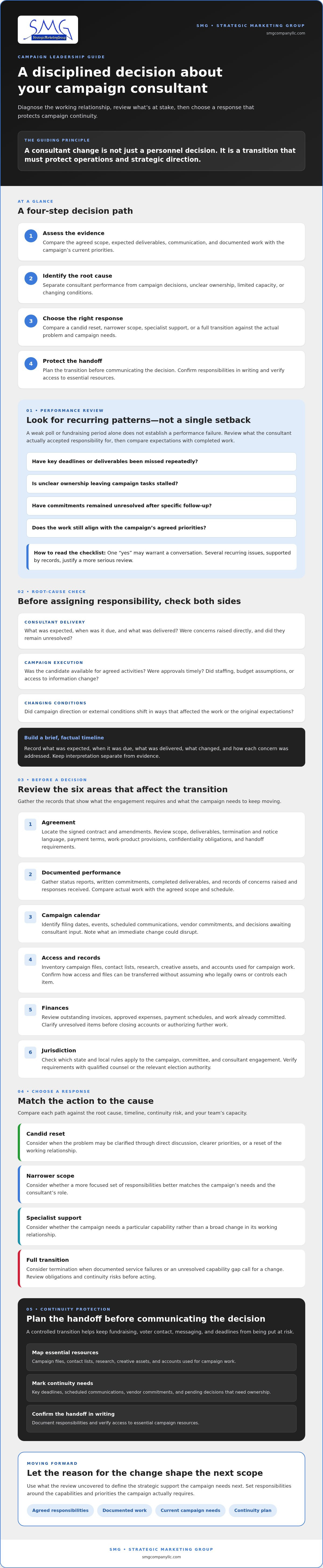
Missed expectations carry more weight during a campaign. A deadline may be approaching, results may be disappointing, and leadership may be asking whether the consultant is delivering. Before deciding how to fire a campaign consultant, assess the relationship against evidence: the agreed scope, expected deliverables, communication, and the campaign’s current priorities.
Political consultants can serve different functions, from strategy and messaging to voter outreach. The overview of Political consultants offers context, but your evaluation should focus on the responsibilities this consultant actually accepted. A single weak poll or fundraising period is not enough on its own to establish a performance failure. Results can also reflect candidate availability, campaign resources, internal decisions, or changing conditions.
Which campaign consultant performance problems justify a serious review?
Look for repeated patterns, not one missed mark. Compare the written scope and schedule with completed work, then note whether concerns remain unresolved after you’ve raised them directly. A capability gap is more likely when essential commitments keep slipping despite clear priorities and timely campaign input. A temporary setback or a change in campaign direction may call for a different response.
Use this concise diagnostic checklist:
Have key deadlines or deliverables been missed repeatedly?
Is ownership unclear, leaving campaign tasks stalled between the consultant and staff?
Have commitments remained unresolved after specific follow-up and discussion?
Does the consultant’s work still align with the campaign’s agreed priorities?
One “yes” may warrant a conversation. Several recurring issues, supported by records, justify a more serious review.
Is the problem the consultant, the campaign, or the conditions?
Before assigning responsibility, examine the campaign’s side of the working relationship. Was the candidate available for agreed activities? Were approvals timely? Did staffing, budget assumptions, or access to information change? If leadership delayed decisions or didn’t complete its own responsibilities, those factors may help explain a missed commitment.
Build a brief, factual timeline before deciding. Record what was expected, when it was due, what was delivered, what changed, and how each concern was addressed. Keep interpretation separate from evidence. This makes it easier to distinguish consultant performance from campaign execution or external conditions, and to decide whether the underlying issue is fixable.
A pattern of documented service failures calls for action. If the evidence instead points to unclear ownership, a shifting strategy, or limited campaign capacity, clarify the cause before choosing a remedy. A sound decision starts with an accurate diagnosis.
What to Review Before You Fire a Campaign Consultant
Before deciding how to fire a campaign consultant, assemble the records that show what the engagement requires and what the campaign needs to keep moving. A structured review can surface contract obligations, operational gaps, and continuity risks before leadership communicates a decision.
1. Agreement: Locate the signed contract and amendments. Review the scope, deliverables, termination and notice language, payment terms, work-product provisions, confidentiality obligations, and any handoff requirements.
2. Documented performance: Gather status reports, written commitments, completed deliverables, and records of concerns raised and responses received. Compare actual work with the agreed scope and schedule.
3. Campaign calendar: Identify filing dates, events, scheduled communications, vendor commitments, and decisions awaiting consultant input. Note what an immediate change could disrupt.
4. Access and records: Inventory campaign files, contact lists, research, creative assets, and accounts used for campaign work. Confirm how access and files can be transferred without assuming who legally owns or controls each item.
5. Finances: Review outstanding invoices, approved expenses, payment schedules, and any work already committed. Clarify what remains unresolved before closing accounts or authorizing further work.
6. Jurisdiction: Check which state and local rules apply to the campaign, committee, and consultant engagement. Verify requirements with qualified counsel or the relevant election authority.
Which contract terms and records should campaign leadership examine?
Build a working handoff list from the agreement and current campaign calendar. Include outstanding deliverables, vendor contacts and commitments, upcoming communications, open decisions, and the location of relevant files. Determine the agreed process for transferring work product and access. An exit memo can help capture essential status and next steps. Campaigns & Elections’ transition guidance offers a useful perspective on documenting a departure.
How do jurisdiction and campaign timing affect the decision?
Termination and reporting obligations can differ by jurisdiction, committee, and contract. San Francisco Ethics Commission guidance is a local example, not a rule to apply elsewhere. Confirm the requirements for your campaign with current official guidance or qualified counsel, especially if the engagement involves a New Jersey committee.
Assess timing against operational risk rather than relying on a universal “safe” window. A change near a major deadline may require a more detailed handoff. Waiting may also carry costs if essential work remains stalled. For broader context on coordinating campaign responsibilities, review campaign management support as you plan the next phase.
Should You Fire, Reset, or Replace Your Campaign Consultant?
Once you’ve identified the source of the problem, match the response to the cause. A communication breakdown may be repairable; a persistent capability gap may require different expertise. The decision about how to fire a campaign consultant should also account for the time remaining, the risk of interrupting campaign operations, and how much oversight your leadership team can provide.
When can a performance reset be better than termination?
A reset can work when the relationship is viable but the operating structure is not. Put revised expectations in writing: list deliverables, name decision-makers, set a communication cadence, and choose a date to review progress. If strategy is under question, independent evidence can help distinguish a messaging or targeting issue from an execution problem. Public opinion polling services may inform that assessment when the research question, audience, and decision it will support are clearly defined.
A reset isn’t a substitute for addressing serious trust or conduct concerns. If those remain unresolved, changing the work plan alone may leave the central risk untouched.
When is replacement the stronger campaign option?
Replacement is more compelling when repeated, material failures persist after direct, documented feedback, or when the campaign requires capabilities the current consultant cannot provide. Before making the change, determine whether an incoming provider can assume essential responsibilities without disrupting scheduled communications or other critical work.
Compare candidates against specific gaps, not broad promises. If the need is campaign management, research, or communications, define the responsibilities and outputs that matter. The right choice is the option your campaign can implement and oversee while keeping priorities and accountability clear.
How to End the Engagement and Protect Campaign Continuity
A decision to end the relationship is only the beginning. To protect the campaign, sequence the change: decide internally, review the agreement and applicable obligations, prepare the handoff, communicate the decision, then verify access and ownership of open tasks. This turns how to fire a campaign consultant into a controlled operational transition rather than a sudden break in campaign activity.
What should a campaign consultant termination conversation cover?
Hold the conversation privately, with the appropriate campaign decision-maker present. State the decision and effective date clearly, consistent with the agreement and obligations you’ve reviewed. Keep the explanation concise and factual. Then address outstanding work, the handoff process, access changes, and where staff or external partners should direct questions. Follow up in writing to confirm the decision and next steps.
Keep the discussion professional, even if the relationship has become difficult. Avoid public blame or unsupported allegations. Internal and external communications should stick to confirmed facts and explain only what people need to know about the change. Preserve relevant records, including the agreement, correspondence, deliverables, invoices, and notes on unresolved responsibilities.
How can you prevent disruption during a campaign handoff?
Assign one campaign lead to coordinate the transition. That person can track outstanding tasks, confirm who assumes each responsibility, and make sure deadlines and scheduled work aren’t overlooked. Before the consultant’s access changes, coordinate with authorized administrators and confirm that essential files and systems remain available to the campaign.
Use a checklist to manage the handoff:
Deadlines: Record upcoming filing dates, events, voter-contact schedules, and scheduled communications.
Vendors: List active commitments, primary contacts, next steps, and any pending approvals.
Files and systems: Identify campaign materials, account access, contact records, and research needed for ongoing work. Preserve records appropriately and confirm transfer procedures.
Open work and payments: Note incomplete deliverables, outstanding invoices, approved expenses, and who will resolve each item.
Decision ownership: Name the person responsible for each pending approval or strategic decision after the departure.
Once the handoff is underway, verify that authorized team members can access the necessary resources and understand their responsibilities. Give staff and partners consistent, limited information about the change. If the campaign needs coordinated support for day-to-day operations during a transition, explore campaign management support based on the responsibilities and capabilities your race requires.
How to Choose the Next Campaign Consultant and Move Forward
A successful transition depends on choosing support that addresses the problem you identified, not simply replacing one name with another. Translate the reason for the change into a concise scope: what needs to be done, who will own each responsibility, and what evidence will show the work is on track. Knowing how to fire a campaign consultant is only part of the process. The next engagement should close the gap without adding unclear roles or unnecessary complexity.
Match capabilities to the campaign’s actual needs. A race facing broad strategic questions may need stronger voter insight, while an execution gap may call for campaign management, communications, or voter outreach support. If the campaign needs a clearer picture of the electorate, electorate analysis can help frame the questions to explore before changing strategy. Research can inform decisions, but it cannot guarantee electoral outcomes.
What should you ask a replacement campaign consultant?
Use interviews to test how a prospective consultant thinks and works, not just to review credentials. Ask how they would assess the campaign’s current position before recommending changes, and request a practical outline of the first phase. Clarify responsibilities, reporting practices, decision points, collaboration with existing staff, and transition expectations. Then explore experience relevant to your campaign’s level, electorate, timeline, and specific needs.
What information would you review before recommending a strategic change?
Which deliverables would you own, and what would require campaign approval?
How would you report progress and flag risks or delayed decisions?
What would you need from the campaign team to begin, and how would you manage the handoff?
Specific answers make it easier to compare proposals on fit and accountability, rather than broad promises. A sound scope also helps leadership understand what the new relationship requires from the campaign itself.
How can SMG support a campaign reassessing its strategy?
Once your criteria are clear, consider whether a firm’s capabilities match the work ahead. SMG offers campaign management, public opinion polling, electorate analysis, and strategic communications. Its campaign management work includes budgeting, staffing, field operations, and day-to-day strategy. SMG reports experience across local, state, and federal campaigns, and in more than 40 states. Confirm current service availability and geographic coverage for any specific engagement.
These capabilities may be relevant if your campaign needs coordinated operational support or research to inform strategic decisions. The right fit depends on your objectives, timeline, and required scope. Discuss your campaign’s strategic needs with SMG to explore whether its support aligns with the next phase.
Make the Next Move With Clarity
Learning how to fire a campaign consultant starts with careful assessment, not a reaction to one disappointing result. Compare performance with the agreed scope, consider whether a reset or narrower role could address the real issue, and review obligations before making a change. If termination is the right course, plan the handoff around campaign deadlines, access, outstanding work, and clear responsibility for next steps.
The next engagement should respond to the campaign’s actual needs. Define the capabilities and accountability you require, then evaluate potential support against that standard. SMG offers campaign management, public opinion polling, and electorate analysis, and reports campaign experience in more than 40 states. These capabilities may be relevant when assessing operations or informing strategic decisions, but fit depends on your campaign’s scope and circumstances.
If your race is considering its next phase of support, Discuss your campaign’s strategic needs with SMG. A clear assessment can help you move forward with purpose and keep your campaign focused on the work ahead.
Frequently Asked Questions
How do I know when it is time to fire a campaign consultant?
No single disappointing result automatically means it’s time to end the engagement. Compare the consultant’s agreed responsibilities with repeated, documented performance, and assess whether communication problems or missed work are affecting campaign operations. Consider your team’s role too: delayed approvals, limited candidate availability, or changing priorities can contribute to missed goals. Before deciding how to fire a campaign consultant, have a direct conversation and review the agreement, unless urgent conduct or legal concerns call for qualified advice.
Should I fire my political consultant during an election campaign?
Possibly, but election timing changes the operational risks, not whether termination is automatically right or wrong. Identify critical deadlines, systems the consultant can access, voter outreach already in progress, and who could assume each responsibility. Compare a focused reset with replacement, considering whether either option protects essential campaign work. Document the decision and transition plan. If contract terms or campaign-finance compliance questions arise, seek advice from qualified counsel before acting.
Can I terminate a campaign consultant contract early?
Whether you can terminate early depends on the written agreement, applicable law, and the specific circumstances. Review the notice and termination provisions, payment obligations, confidentiality terms, and work-product language. Don’t assume there’s a standard notice period or a universal right to end the engagement. If the contract is unclear, consult qualified counsel. Keep records of relevant communications, and coordinate any handoff according to the obligations you’ve reviewed.
What should I do before firing a political consultant?
Document your concerns and compare completed work with the agreed scope before making a decision. Check the campaign calendar for deadlines and identify dependencies, such as pending approvals, vendor commitments, or scheduled outreach. Review the agreement and verify relevant jurisdiction-specific requirements. Consider whether a reset or narrower scope could address the root cause. Before communicating the decision, prepare a handoff plan for files, accounts, open tasks, and ownership of key decisions.
How do I fire a campaign consultant professionally?
Speak privately and directly. State the decision, effective timing, and handoff expectations clearly, using language consistent with the agreement and any advice from counsel. Keep the conversation concise and factual; avoid personal attacks, public speculation, or unsupported claims. Follow up in writing to confirm key details. Have an authorized campaign lead coordinate access, records, unfinished work, and staff communications so responsibilities remain clear through the transition.
What should happen to campaign data and accounts when a consultant leaves?
Inventory campaign files, calendars, vendor contacts, research, and the systems the consultant used. Check the agreement, and consult qualified counsel if needed, to clarify ownership, access, retention, and transfer responsibilities. Don’t assume every account or file can be transferred in the same way. Use authorized administrators to update access, preserve necessary records, and assign a campaign lead to verify that essential materials remain available for ongoing operations.
Do campaign consultant termination rules vary by state?
Yes. Registration, reporting, contract, and campaign-finance obligations can vary by jurisdiction and by the details of the engagement. San Francisco Ethics Commission guidance applies specifically to San Francisco, so don’t treat it as a rule for another location. For a New Jersey campaign, verify current requirements with the appropriate authorities or qualified counsel. A general online checklist can help identify questions, but it shouldn’t replace jurisdiction-specific advice.
Comments